
Lorem ipsum
Lorem ipsum dolor sit amet, consectetuer adipiscing elit. Phasellus hendrerit.
Lorem ipsum
Lorem ipsum dolor sit amet, consectetuer adipiscing elit. Phasellus hendrerit.
Lorem ipsum
Lorem ipsum dolor sit amet, consectetuer adipiscing elit. Phasellus hendrerit.
Classroom Time
N/A
Range Time
4 Hours
Rounds:
150
Good For:
Intermediate
Course Description
In Beyond the Basics the focus is on 5-15 yard shooting and teaching students to understand that it’s possible to get hits at close range with a less than perfect sight picture.
The other skill that goes along with this is learning the timing of your gun as it recoils, so you can manipulate the trigger as the gun comes out of recoil or comes to the next target, instead of waiting to see the ideal sight picture to apply any trigger pressure.
Required Equipment:
- Handgun
- 150 Rounds of Ammo
- Belt Holster
- 2 or More Magazines/Speedloader
- Eye and Ear Protection
- Notetaking Material (Pen and Paper)
- Baseball Cap (to deflect brass)
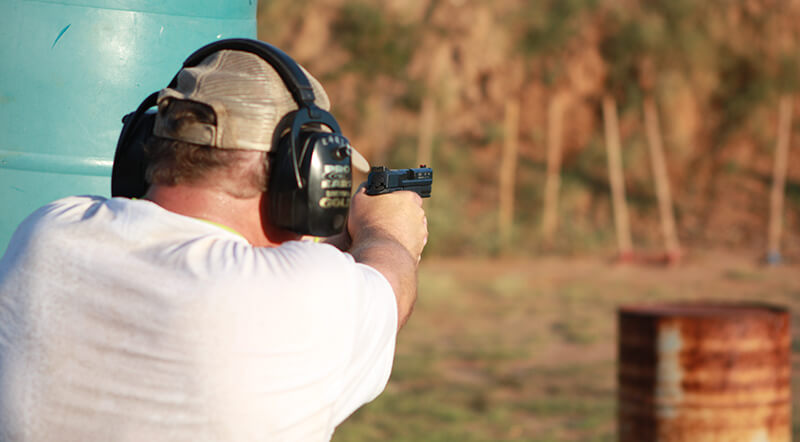
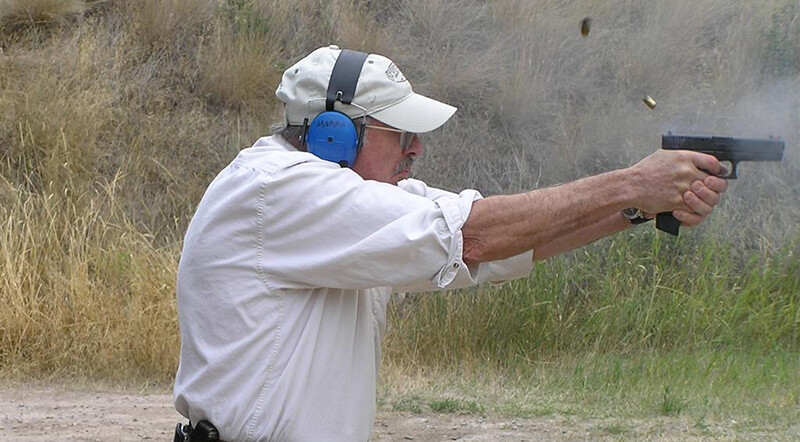
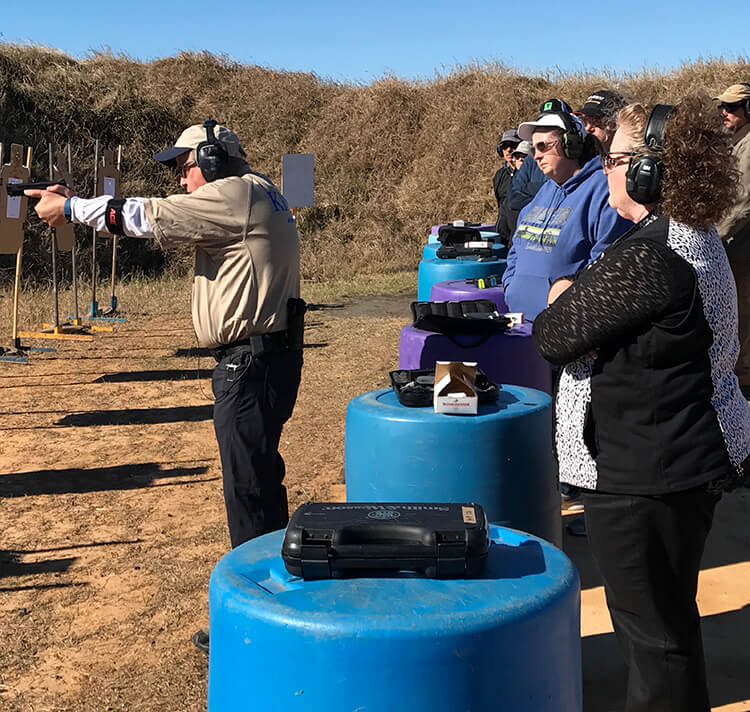
Defensive Shooting
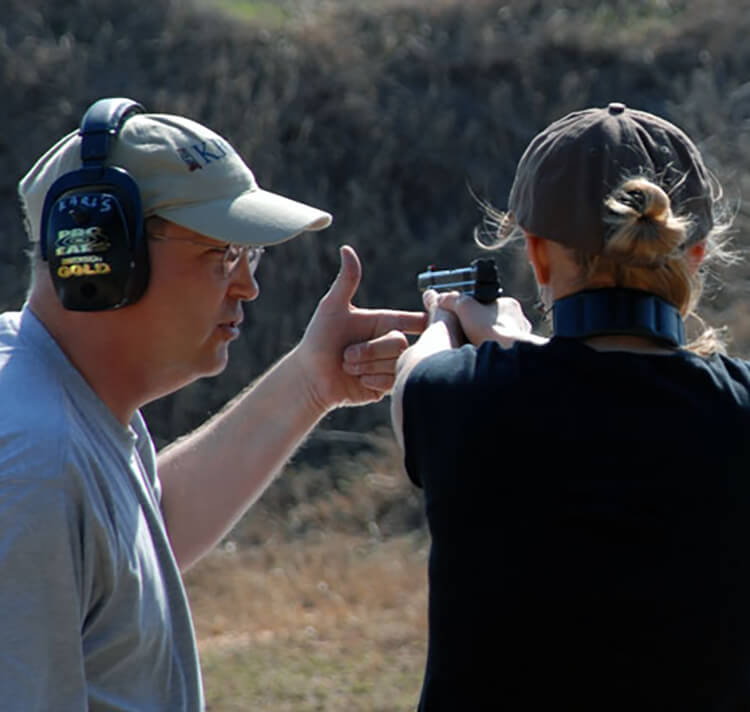
One-on-One Coaching
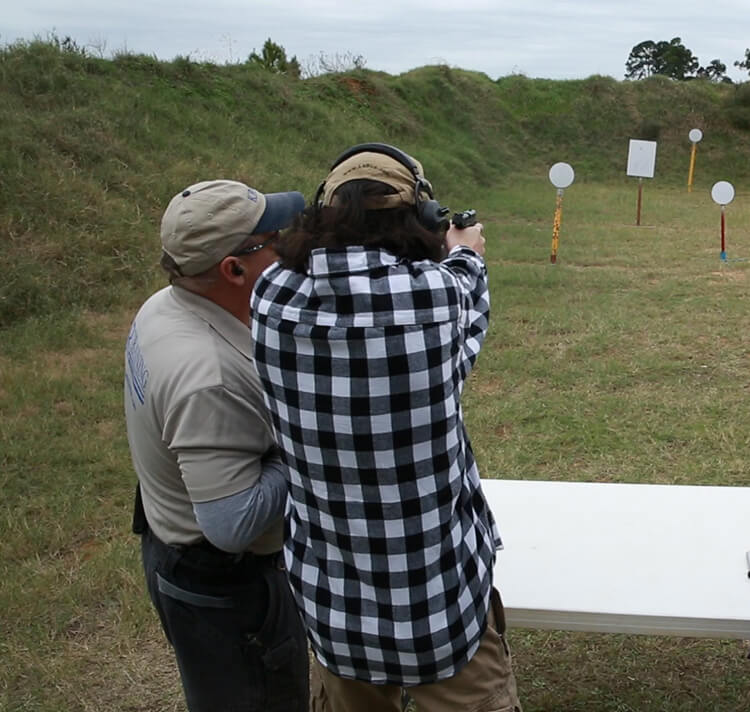
Student Focused
Topics
- Reducing perceived recoil,
- Improving on the basic grip and stance,
- Increasing accuracy on single and multiple targets,
- Increasing speed on single and multiple targets.
Additional information about local pistol competitions and gun clubs will be provided. Grip and stance techniques taught are based on the modified Isosceles platform popularized by world champion IPSC competitors but now in widespread use by pistol competitors in many sports, as well as law enforcement (SWAT) and elite military units.
Prerequisites
Previous handgun shooting experience, Basic Pistol or equivalent preferred
Is this the right course for me?
This is the right course for you if:
- You own your own handgun,
- Passed (or can pass) the Texas LTC Qualification with a 90% or better, and
- Have taken atleast one other formal training course.
Additional Information
We are frequently asked, “what are the differences between your Defensive Pistol Skills and Beyond the Basics classes?”
Defensive Pistol Skills is all about 0-5 yard shooting and drawing from concealment – teaching specific skills that you’d use to survive a close-range gunfight. In that course we don’t fix any problems with grip and stance – there’s no time allotted in the course for it. Students shoot multiple targets but they are at the same distance.
In Beyond the Basics the focus is on 5-15 yard shooting and teaching students to understand that it’s possible to get hits at close range with a less-than-perfect sight picture. There’s a spectrum of sight pictures (Brian Enos’ book has a great definition of them) from Type 1 (point shooting) to Type 2 (flash sight picture, threat-focused shooting, and many other names for this) to traditional sight picture (Type 3) and beyond. Once students understand Types 1/2/3, then the next step is to learn how to transition between those and “see what you need to see” for a given target, so in BTB we work on shooting multiple targets at mixed ranges in the 5-15 yard zone, so students get out of the “use the same sight picture for every target” mindset.
Type 3 is 7-15 yard shooting (roughly) and corresponds to the traditional sight picture most shooters use for every shot regardless of target size or distance. It’s too slow for up close and personal and too coarse to get good hits beyond 15 yards.
Type 4 and 5 shooting is covered in the AT-6 class.
The other skill that goes along with this is learning the timing of your gun as it recoils, so you can manipulate the trigger as the gun comes out of recoil or comes to the next target, instead of waiting to see the ideal sight picture to apply any trigger pressure. Most shooters take their finger completely off the trigger after every shot, which isn’t necessary if you know that you are going to shoot a follow-up shot at the same or a nearby target.
We also fix a lot of problems with support hand grip. Most untrained shooters have an ineffective support hand grip. The support hand, when used properly, is what does a lot of the work keeping the gun stable and reducing muzzle flip. It’s not really possible to learn to shoot good hits at a faster than the CHL-shooting-test pace without fixing the support hand grip.
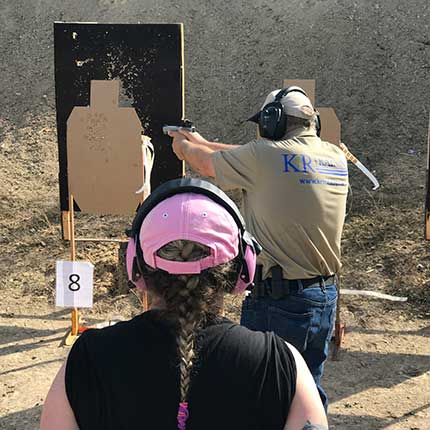
Follow Through
Reacquiring sight picture after recoil while keeping your gun on target
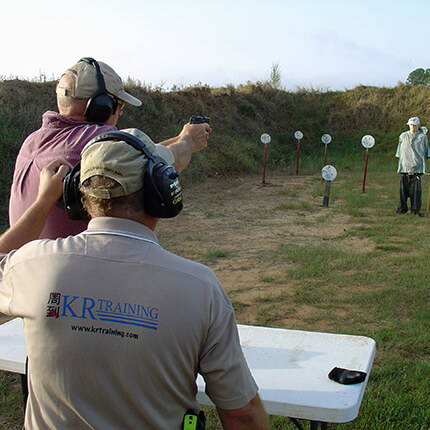
Safe Gun Handling
Constant attention to and awareness of trigger finger and muzzle direction.
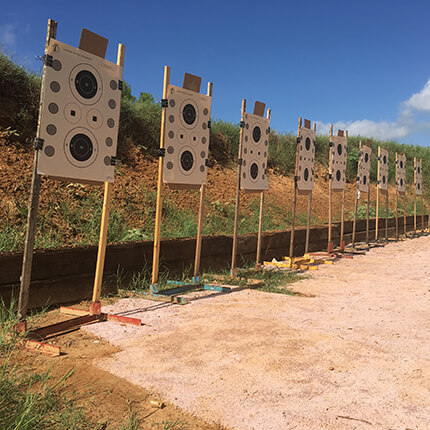
Sight Alignment/Picture
Sight picture quality, target distance/size, and available time considerations.
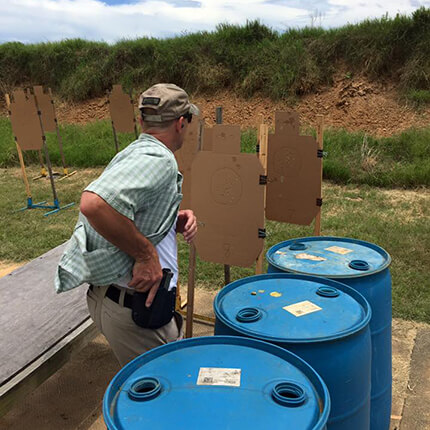
From Ready to First Shot
Bringing the gun from ready to the target and firing accurate shots with CHL-test time limits