
Lorem ipsum
Lorem ipsum dolor sit amet, consectetuer adipiscing elit. Phasellus hendrerit.
Lorem ipsum
Lorem ipsum dolor sit amet, consectetuer adipiscing elit. Phasellus hendrerit.
Lorem ipsum
Lorem ipsum dolor sit amet, consectetuer adipiscing elit. Phasellus hendrerit.
Classroom Time
N/A
Range Time
4 Hours
Rounds:
200
Good For:
Newer Shooters
Course Description
The focus of this course is giving the student a more realistic understanding of what can and will occur during and after a violent encounter. While it has no live-fire component, most students find this course more stressful (and more educational) than additional courses that consist of live fire drills against paper targets.
This course is part of the core curriculum of the 40 hour Defensive Pistol Skills Program.
Required Equipment:
- A belt holster,
- Long sleeved shirt and long pants that can be worn during Airsoft exercises.
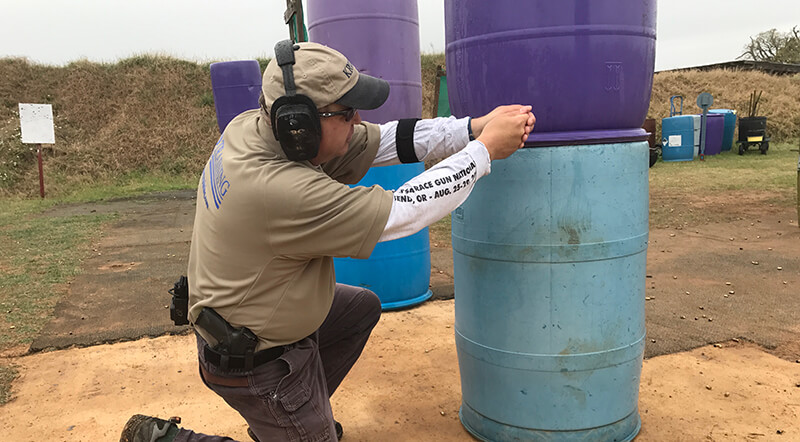
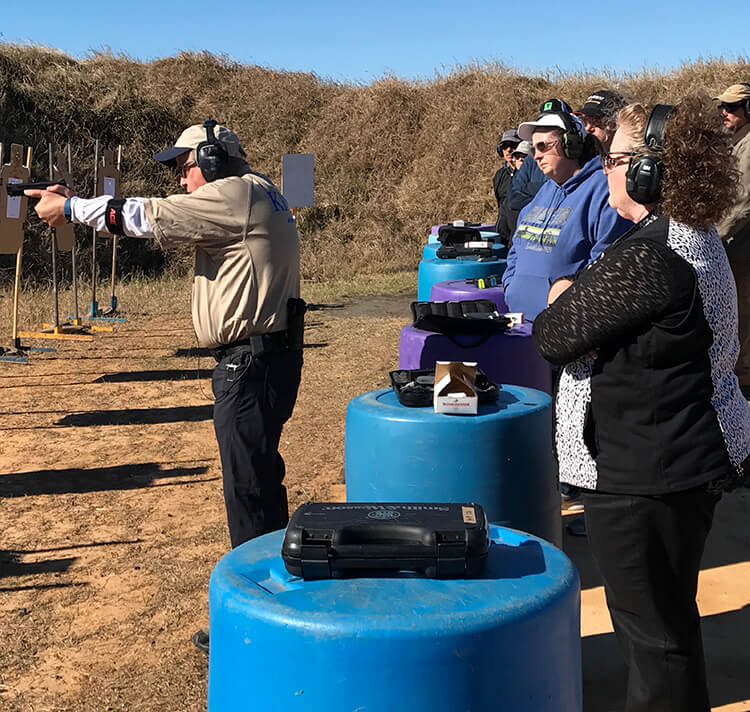
Defensive Shooting
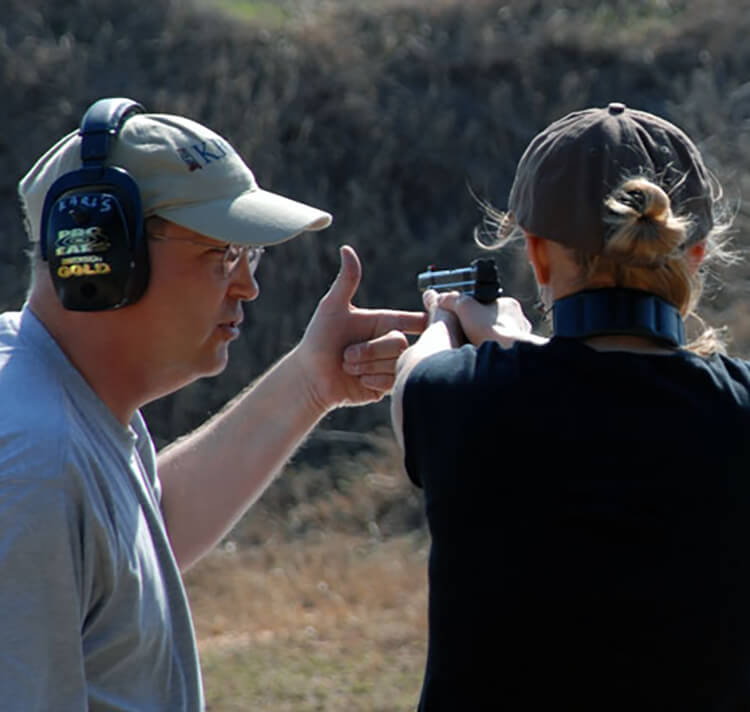
One-on-One Coaching
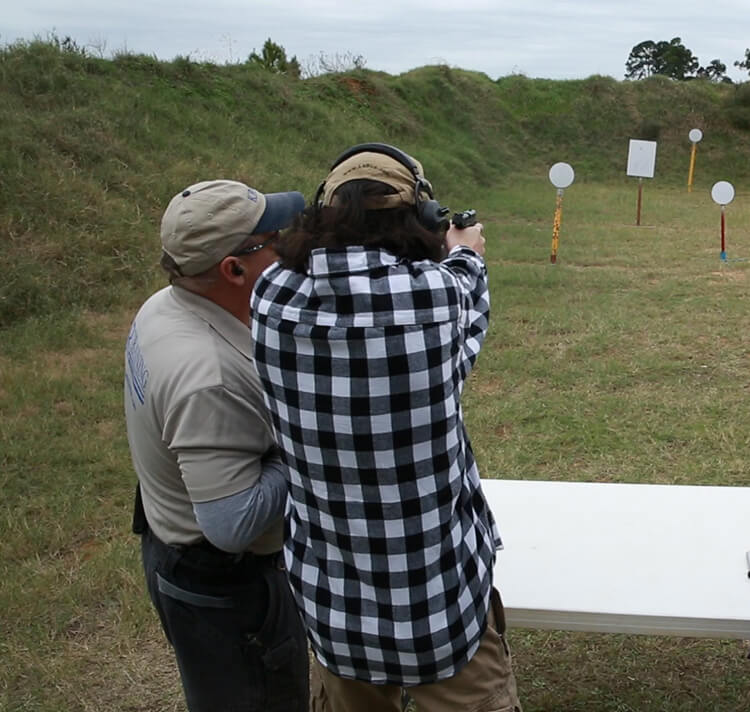
Student Focused
About Scenario-Based Training
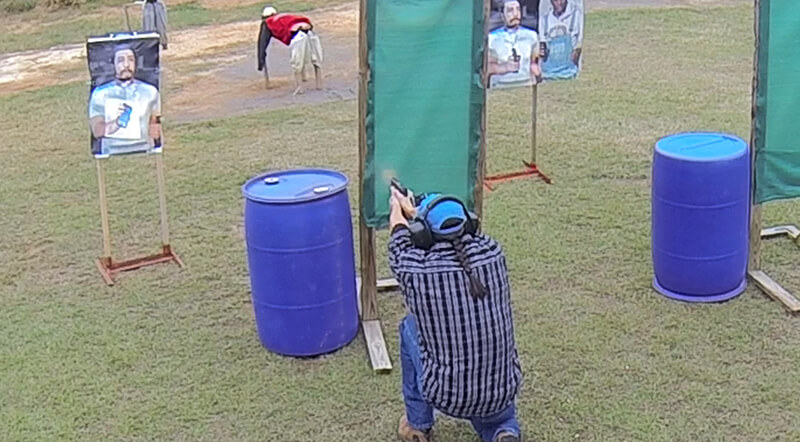
Our philosophy is that scenario based training is the only way to fully experience all the variables present in a real confrontation, most notably live opponents that talk, move, think and shoot back. The goal of our scenarios is not for students to have paintball wars or for our staff roleplayers to boost their egos by defeating students in impossible-to-survive situations. The training is like sparring: during the first half of AT-II, and during the prerequisite courses, students have learned the skills and responses required to ‘win’ the AT-II scenarios. Just as in real life, the best response may not always be to use deadly force, which is why students must make decisions more complex than ‘shoot/don’t shoot’. They must decide whether to talk or run, what to say, where to run, where to move, when/where/who to shoot (and in what order), and what to do after the incident is over. Unlike many schools who stop the clock when the last shot is fired, we test our students’ ability to deal with injured family members, bystanders, arriving emergency personnel and unexpected incidents.
Our goal is to challenge students to use what they already know, under time pressure. We expect students to make mistakes. Each scenario is de-briefed and students typically get the opportunity to repeat scenarios to correct errors. The purpose of scenario based training is to give the student experience in winning – but winning must occur as a result of doing the right things, not as a result of the roleplayer throwing the victory to the student. Most of us, when asked to give an important presentation, will prepare and rehearse before the actual event, so as not to make a terrible error onstage. The price of making a mistake in a real world confrontation is high, and live action scenario based training provides a venue for students to make (and correct) potentially fatal errors in less hazardous environment.
Topics
The essential skills required for the defensive use of a pistol. Those skills include:
- Psychological aspects of use of deadly force,
- Dealing with attackers, witnesses, bystanders, and arriving emergency personnel,
- Building an integrated self-defense system with non-lethal and lethal options,
- Setting tactical priorities
- 8-10 live action scenarios using inert training weapons and Airsoft guns.
Prerequisites
Texas CHL or instructor approval required. Recommended that students have attended a class or competition where drawing from a holster is taught or required.
Optional Equipment
- Soft knee and elbow pads,
- Cup or other sports protective gear.
See the general policies page for suggestions on food, drink, clothing, etc.
Additional Information
This course was typically offered as part of a 2 day weekend of training that includes AT-1, AT-1A and AT-2 in a package called the ‘AT Weekend’. Here is additional information and photos from previous Advanced Training weekends. In 2010, AT-2 was split into two courses, Personal Tactics Skills, and the AT-2 Scenario Only course.
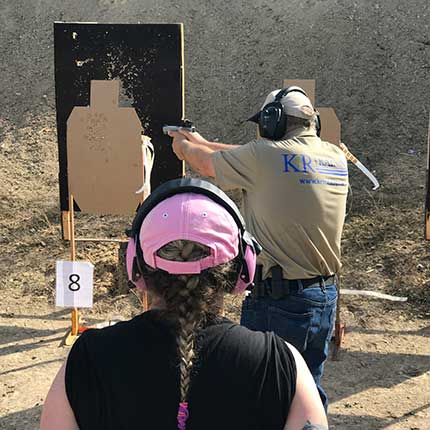
Follow Through
Reacquiring sight picture after recoil while keeping your gun on target
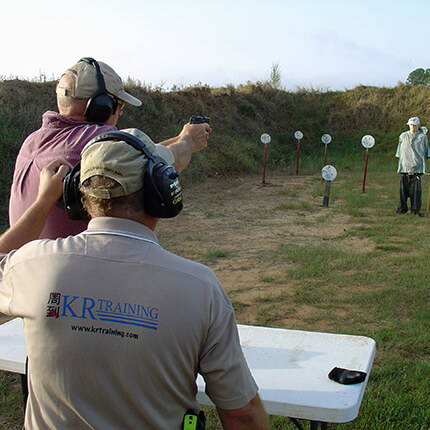
Safe Gun Handling
Constant attention to and awareness of trigger finger and muzzle direction.
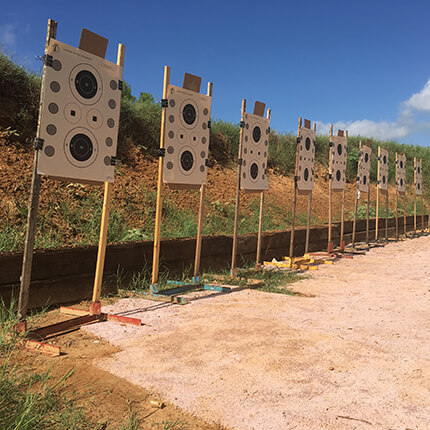
Sight Alignment/Picture
Sight picture quality, target distance/size, and available time considerations.
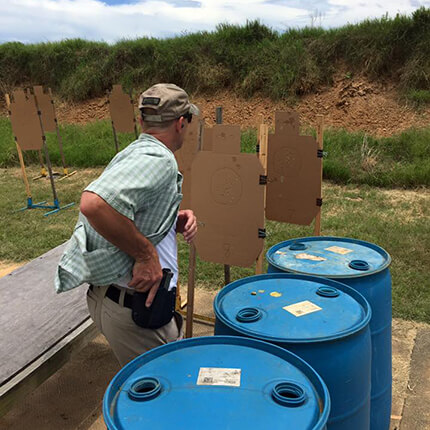
From Ready to First Shot
Bringing the gun from ready to the target and firing accurate shots with CHL-test time limits